

A healthcare case study about moving medical practitioners from understanding healthcare disparities to actively working for maternal health equity.
In the United States, maternal mortality rates are comparable with countries such as Libya, Egypt, Mauritania, Venezuela, and others in the Global South. In the UK, according to research by University of Oxford and University of Birmingham authors published in The Lancet Regional Health Europe, women of Black and Asian ethnicity remained at increased risk for maternal mortality. This is due in large part to the structural racism embedded within healthcare systems. When we say racism hurts everyone, this is, in part, exactly what we mean.
Hardly just an American problem, high maternal mortality rates are the product of racist policies, institutional practices, and the forces that determine:
- whose pain gets taken seriously,
- whose symptoms get escalated,
- whose discharge gets planned carefully, and
- whose does not.
When you set up a system that says it’s acceptable to let people die while giving birth, everyone suffers—it’s just that some will suffer more than others. That’s the rub. As long as people feel comforted by the fact that someone else is suffering more than they are, nothing changes for anyone. For example, research shows that a Black American woman with a college degree or higher faces a higher pregnancy-related mortality rate than a white woman who never finished high school. And, in practice, the way these two groups vote differs. In the 2024 presidential election, “Black women and Hispanic women were more likely than White women to say abortion policy had a major impact on their decision to turn out and which candidate they supported.”
A system that is willing to sacrifice one group will never ultimately protect anyone.
Maternal mortality does not have to be an accepted part of our lives. Countries like Sweden, Switzerland, and Norway have driven their maternal mortality rates to practically zero. They didn’t necessarily spend more money on healthcare than everyone else. They did it by treating every patient’s life as equally worth saving. In fact, even in Sweden, research shows that when patients are treated differently, health inequities begin to show up.
According to the World Health Organization, approximately 92% of all maternal deaths globally are preventable. In the United States, which spends more on healthcare than any of our GDP peers, more than 80% of pregnancy-related deaths are preventable.
Within both global and national contexts, it is important to note that all of this is fixable. There is a difference between a clinician who is merely aware of health disparities and one who can build interventions that helps eliminate them. Closing the gap between what people know and what they do is core to how we work.
It is also some of the hardest work in medicine, so we were glad when a national medical professional association dedicated to maternal health approached us with a cohort of clinicians as a key point of intervention. The initiative supported their shift from recognizing disparities to actively designing and implementing solutions that reduce preventable maternal deaths.
Before We Started
Our track record in the sexual and reproductive health and rights space, and the reputation we’ve built doing this work, is what got us in the door. This association came to us with a cohort of OB/GYNs and other maternal health practitioners from institutions across nine states: Alabama, Arizona, Iowa, Louisiana, Michigan, Ohio, Oklahoma, Oregon, and Texas.
The cohort already had a 101-level understanding of health equity. So they understood, at least conceptually, that racist disparities in maternal outcomes exist. They were ready to level up: more advanced analytical toolkit, messaging strategies, and the institutional courage to translate that awareness into action inside their own hospitals.
The association originally asked us to give a 90-minute Health Equity 201 training to their cohort. We could have easily delivered exactly that: checked a box, sent an invoice. But we’ve been doing this work for over twenty years. We know what a single-session training can and cannot do. It can shift awareness—but, on its own, it cannot change what happens on a labor and delivery floor at 1:38 AM on a random Tuesday morning. That requires follow-through, accountability, and structures that keep practitioners engaged long after the training ends.
So we proposed our hybrid Equity Action Accelerator instead. It’s a two-hour in-person Health Equity 201 training followed by six structured virtual sessions, one-on-one coaching, and asynchronous access via our proprietary digital learning management system. We tailor and custom build it for each client.
They said yes.
What Changed
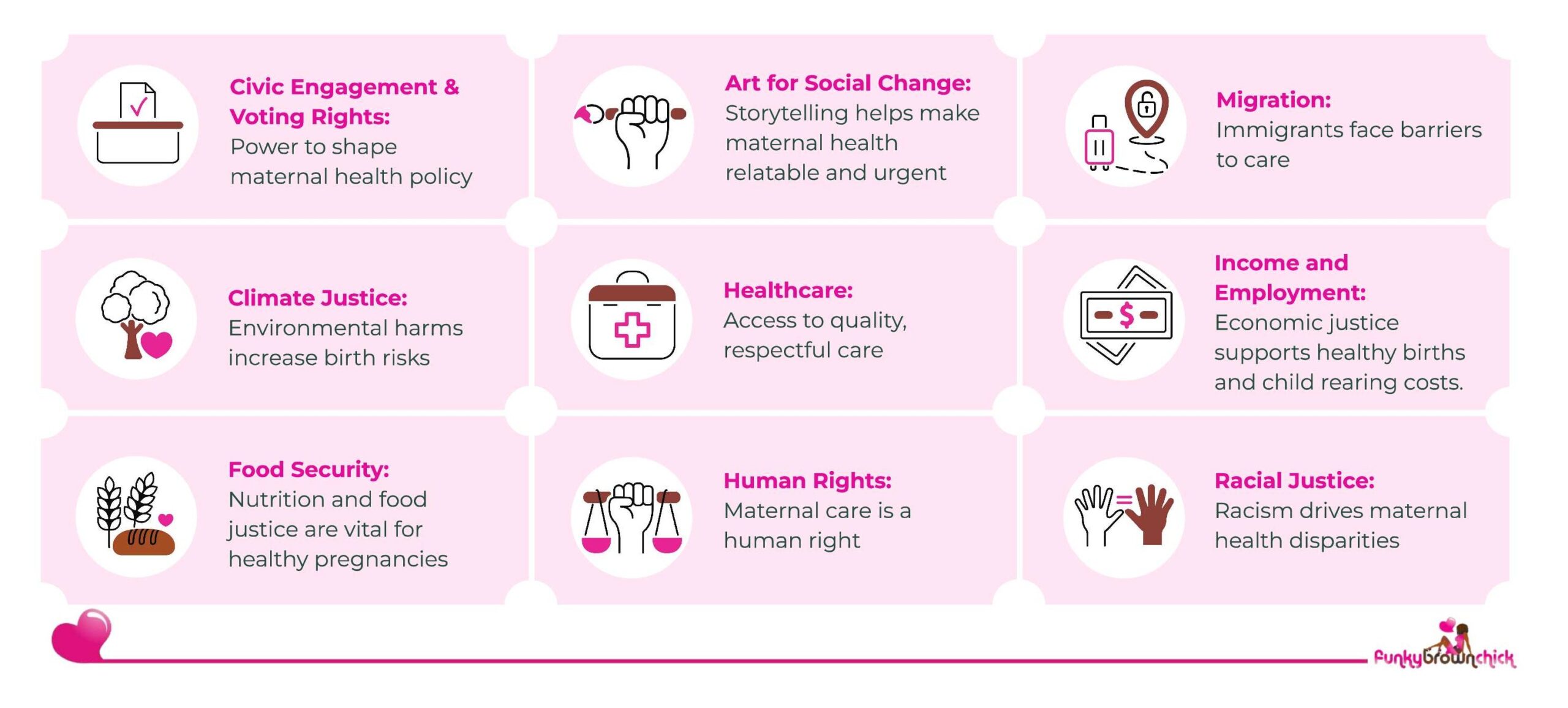
From Awareness to Action-Readiness: A Measurable Confidence Shift
From the start, we built a monitoring and evaluation framework grounded in the UN’s Sustainable Development Goals:
- SDG 3.1.1: Reduce the maternal mortality ratio
- SDG 3.1.2: Increase the proportion of births attended by skilled health personnel
- SDG 17.16.1 and 17.17.1: Strengthen multi-stakeholder partnerships for sexual and reproductive health and rights advocacy and service delivery
Against those indicators, we developed KPIs to measure:
- knowledge uptake about health equity,
- self-assessed confidence in advocating for it,
- and participants’ overall satisfaction with the program.
The framework included coaching logs, pre- and post-surveys with open-ended reflection prompts, and interactive case studies. We even added in culture strategies that met practitioners where they were. Together, we watched relevant film clips that made structural concepts tangible, helping turn meaningful Hollywood depictions into professional, equity-driven principles applicable to the labor and delivery room.
Medical doctors are often a uniquely discerning audience, especially on complex issues like structural racism. That’s why we are particularly proud that our scores indicate the training landed, the delivery was effective, and participants left feeling capable rather than lectured to.
Our training scored exceptional across the board: 4.83 out of 5 on three of four satisfaction measures, with 83% of participants giving it the highest possible rating. One of our team members who delivered the training is a young woman of reproductive age with lived proximity to this work. Participants described her as “great” and “engaged.” One called our messaging framework content “very informative.” Another singled out one of our core training visuals as a highlight.
We were pleased that the single largest shift we measured and observed was in the practitioners’ self-reported confidence in planning and implementing equity-centered interventions. Their confidence in that area rose 34%, from an average of 3.11 out of 5 before the training to 4.17 after.
That increase in confidence matters because participants will apply these frameworks directly within patient communication, escalation practices, institutional advocacy, and equity-focused quality improvement efforts. Knowing about inequity is one thing. Feeling equipped to build an intervention, navigate institutional resistance, and see it through is another.
From Generic Frameworks to Proprietary Tools Built for This Audience
Every implementation we offer is a custom build. For this project, we researched, co-developed, and organized distinct Health Equity 201 curricula covering advanced equity analysis, structural racism in medicine, equity principles in action, communication strategy, and community engagement. We built a Language Adaptation Guide that helped clinicians see, in plain terms, how the words they use in clinical documentation can perpetuate bias, and what to say instead. We also developed a tailored messaging framework to help practitioners communicate about maternal health equity with colleagues who may not share their values, especially in politically complex institutional environments.
Post-training qualitative surveys showed participants started using these frameworks immediately. Where pre-training responses to a clinical scenario tended toward general statements like “all patients must be evaluated when they voice complaints,” post-training responses named specific frameworks and applied them directly to clinical settings.
From a One-Time Training to a Three-Month Institutional Change Process
The Equity Action Accelerator ran from July to October 2025, across six virtual sessions. Each built on the previous one: Intersectional Systems Mapping, Structural Determinants of Health, Co-Governance with Communities, When Integrity Comes at Personal or Professional Risk, and Integration and Next Steps.
We combined coaching, systems analysis, interactive case studies, culture strategies that include popular movie clips, and peer learning. Redlining. Medicaid policy barriers. Healthcare deserts. Hart’s Ladder of Youth Participation to help practitioners understand what genuine community co-governance looks like in a hospital context. We covered a lot of ground.
Specific, one-on-one coaching ran alongside every session. Feedback was specific: which survey questions might create barriers for patients without stable housing, which legislative advocacy strategies were most likely to survive in each practitioner’s specific state, which language choices in outreach materials would and would not reach the communities most affected by disparate outcomes. Oh, AI could never!
By the end of the Accelerator, participants had submitted complete, context-aware Equity Action Plans with SMART goals targeting real disparities in their own communities, with disaggregated data practices, patient feedback systems, postpartum coverage gaps, and interpreter access among them.
From Training Room to Peer-Reviewed Medical Journal
We measure our success and impact by what our clients are able to do after we’ve left the room. Following our Equity Action Accelerator, the association published a peer-reviewed Special Statement in a Wiley medical journal.
This is not a coincidence. It is the direct result of an organization committed to structural change who delivered us a cohort of practitioners for six months to deepen their structural analysis, develop actionable equity frameworks, and build the institutional vocabulary to translate that learning into clinical guidance. Our training contributed to a body of published medical scholarship that will shape how OB/GYNs across the country review adverse outcomes and design quality improvement interventions.
That is what systemic change looks like. And it happened because of who we are. It’s about our approach, lived experience, and twenty years in this work. It’s “how” we train, more than “what” we teach.
The Lasting Impact
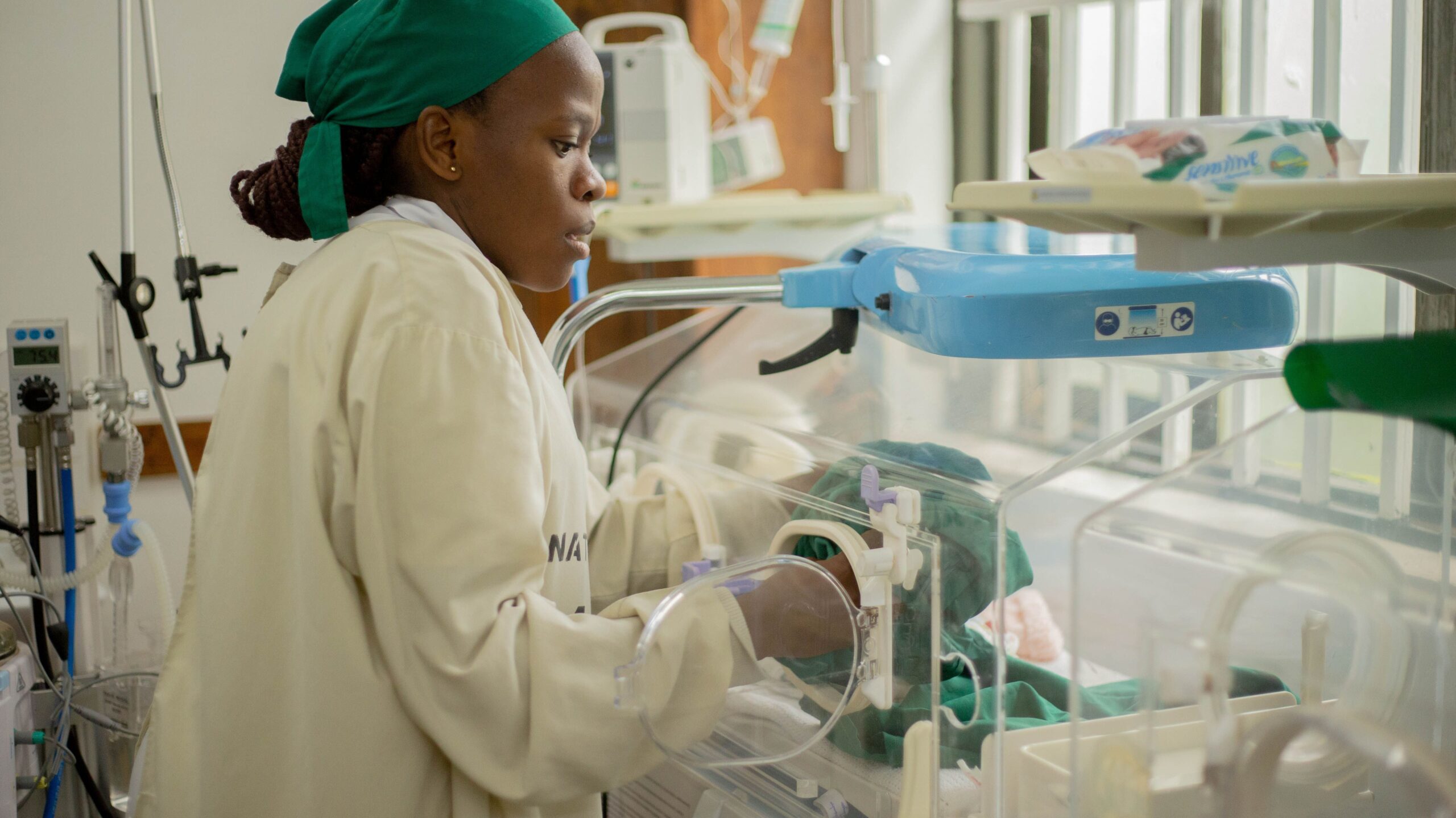
So, what could a 34% confidence increase look like at 1:38 AM on a Tuesday?
It could look like this:
A patient who is a woman of color on the labor and delivery floor mentions, for the second time, that something feels wrong. Before our training, that clinician might have documented it generically, deferred to a busy attending, or sent her home with reassurance.
The clinicians we trained are now better attuned to recognizing patterns, naming them in the chart with precision, and escalating. The next provider who reads that chart could see a complete clinical picture instead of a minimized one. The patient could stay. She could be monitored. She could live. That is the direct, logical conclusion of everything this program was built to do. And we look forward to tracking the data to further monitor and evaluate long-term outcomes.
Whose pain gets taken seriously? Whose symptoms get escalated? Whose discharge gets planned carefully? We opened this case study with those questions because they are the ones that determine whether a patient walks out of a hospital or doesn’t.
Based on publicly available data, the practitioners we trained work at institutions who collectively serve an estimated 15 to 20 million patient visits annually. That is not a small number. It means that every clinician who left our Accelerator more confident, better equipped, and more structurally aware now carries the answer to those questions into institutions that collectively see up to 20 million patients a year.
That is what this work is for. This is a case study about what happens when you stop asking clinicians to be more aware and start building the conditions for them to act.
We’re ready to train more people to build equitable systems and institutions. Ready to make a lasting impact? Get us on your team.